Meditate on God's Word
Take a few quiet moments to reflect on today's message. Allow the Holy Spirit to speak to your heart as you read.
Reading time
9 min read
Introduction
There is a great difference between knowing about God and truly knowing God.
Many people know the name of God. Many attend church, pray, sing worship songs and even speak about the goodness of God. But Scripture shows us that genuine love for God is demonstrated through obedience to His commandments.
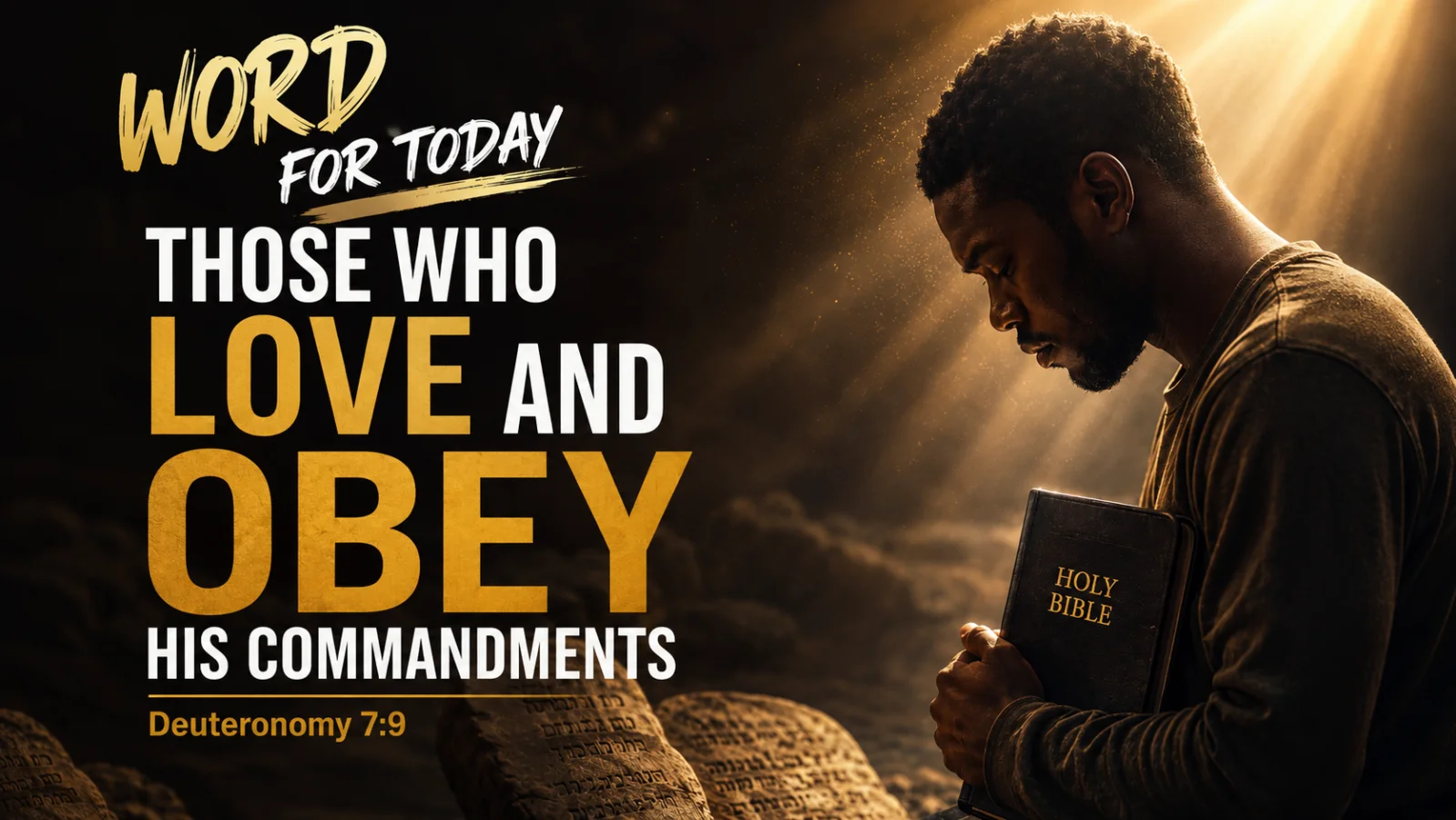
Deuteronomy 7:9 reveals something powerful about God's character. He is God, He is faithful, He keeps covenant, and He shows mercy to those who love Him and keep His commandments.
God is not looking merely for people who will profess love with their lips. He desires people whose lives demonstrate that love through obedience.
Jesus made this principle clear:
If ye love me, keep my commandments.”
John 14:15
Therefore, loving God and obeying God cannot be separated.
1. GOD IS A FAITHFUL GOD
Deuteronomy 7:9 begins by saying:
“Know therefore that the LORD thy God, he is God, the faithful God.”
Before the Scripture talks about our love and obedience, it reminds us about God's faithfulness.
God does not change according to circumstances.
When everything is going well, He is God. When life becomes difficult, He remains God. When people disappoint us, He remains faithful. When we fail, His character does not change.
Numbers 23:19 says:
God is not a man, that he should lie.
God keeps His word.
His promises are not empty promises. His covenant is not based on emotion. When God says something, He has the power and character to fulfil it.
This should give every believer confidence.
We obey God not because we are serving an unreliable master. We obey Him because the One who commands us is faithful.
2. LOVE FOR GOD IS MORE THAN WORDS
It is easy to say, “I love God.”
But the question is: Does our life demonstrate that love?
A person can say they love God while deliberately living contrary to God's Word.
The Bible gives us a practical test of genuine love.
1 John 5:3 says:
“For this is the love of God, that we keep his commandments.”
Biblical love is not merely an emotional feeling.
Love produces obedience.
If I truly love God, I will care about what He says.
If I love God, I will not deliberately choose sin because it is convenient.
If I love God, His Word will matter to me.
If I love God, I will be willing to obey Him even when obedience is difficult.
Our love for God is revealed by the choices we make when nobody is watching.
3. OBEDIENCE IS THE EVIDENCE OF LOVE
Obedience is not a way of buying God's love.
Rather, obedience is the evidence that we have received and value His love.
Jesus said:
He that hath my commandments, and keepeth them, he it is that loveth me.”
John 14:21
Notice the connection:
Love → Commandments → Obedience
God does not want a relationship where we only come to Him when we need something.
He wants a relationship where we trust Him enough to obey Him.
Sometimes God's command may conflict with our feelings.
Sometimes obedience may require us to forgive when we want revenge.
Sometimes it may require us to tell the truth when lying would benefit us.
Sometimes it may require us to walk away from an ungodly relationship.
Sometimes it may require us to surrender something we love.
That is where genuine love is tested.
It is easy to obey when obedience is comfortable.
The real test of love is obedience when obedience costs something.
4. GOD'S COMMANDMENTS ARE FOR OUR GOOD
Some people see God's commandments as restrictions designed to prevent them from enjoying life.
But God's commandments are actually expressions of His wisdom and love.
A loving father warns his child not to touch fire, not because he hates the child, but because he understands the danger.
In the same way, God knows what sin can do to a person's life.
When God says, “Do not lie,” He understands the destruction dishonesty can cause.
When He says, “Flee fornication,” He understands the consequences of sexual immorality.
When He commands us to forgive, He understands the damage bitterness can cause.
When He tells us to love others, He understands the power of godly relationships.
God's commandments are not designed to destroy our freedom.
They protect the life He has given us.
5. OBEDIENCE REQUIRES TRUST
Why do people sometimes struggle to obey God?
Because obedience requires trust.
When God tells Abraham to leave his country, Abraham had to trust Him.
When God told Noah to build an ark, Noah had to trust Him.
When God told Peter to launch the net into the deep, Peter had to trust Him.
Obedience often begins where human understanding ends.
You may not understand everything God is doing, but you can trust the One who is doing it.
Proverbs 3:5 says:
Trust in the LORD with all thine heart; and lean not unto thine own understanding.
You do not need to understand everything before you obey God.
You need to trust Him.
6. GOD REMEMBERS THOSE WHO LOVE HIM
Deuteronomy 7:9 says that God:
“keepeth covenant and mercy with them that love him and keep his commandments to a thousand generations.”
What a powerful statement!
God sees obedience that people may never see.
There are times when you obey God and nobody applauds you.
You choose purity when nobody would have known.
You tell the truth when lying would have been easier.
You forgive when nobody would blame you for holding a grudge.
You refuse to compromise when compromise would have brought you an advantage.
You remain faithful when nobody is watching.
God sees it.
Hebrews 6:10 says:
“God is not unrighteous to forget your work and labour of love.”
Your obedience is never wasted.
7. OBEDIENCE ALSO AFFECTS FUTURE GENERATIONS
Deuteronomy 7:9 speaks about God's covenant and mercy extending to “a thousand generations.”
This reminds us that our relationship with God is bigger than ourselves.
What we do today can influence people who come after us.
A father who genuinely walks with God can influence his children.
A mother who demonstrates godliness can influence her household.
A Christian who refuses to compromise can influence friends, colleagues and an entire community.
Your obedience can become someone else's example.
Likewise, disobedience can also have consequences beyond us.
Therefore, we should ask ourselves:
What kind of spiritual legacy am I leaving behind?
Will those who come after me see someone who merely talked about God, or someone who genuinely loved and obeyed Him?
8. OBEDIENCE IS NOT ALWAYS EASY
We must not pretend that obedience is always convenient.
There will be moments when your flesh says one thing and God's Word says another.
Your emotions may say, “Get revenge.”
God says, “Forgive.”
Your pride may say, “Defend yourself.”
God may say, “Be humble.”
Your desire may say, “Take what you want.”
God says, “Wait.”
Your circumstances may say, “Compromise.”
God says, “Stand.”
That is where obedience becomes meaningful.
Obedience is choosing God's will over our own will.
Jesus Himself demonstrated this in the Garden of Gethsemane.
He prayed:
Not my will, but thine, be done.”
Luke 22:42
That is the heart of obedience.
9. DELAYED OBEDIENCE IS STILL DISOBEDIENCE
One of the dangers in the Christian life is knowing what God wants but continually postponing obedience.
“I will do it later.”
“I will change eventually.”
“I will forgive when I feel ready.”
“I will stop this relationship when the time is right.”
“I will surrender this habit one day.”
But obedience is not obedience because we eventually do what God says.
When God gives us clear instruction, we should respond with faith.
Samuel told Saul:
To obey is better than sacrifice.”
1 Samuel 15:22
God is more interested in our obedience than religious activities performed while we deliberately ignore His Word.
We cannot compensate for disobedience with religious activity.
10. GOD WANTS OBEDIENCE FROM THE HEART
True obedience should not be mechanical.
God wants our hearts.
A person can obey outwardly while remaining rebellious inwardly.
But God looks beyond our actions into our motives.
He wants us to obey because we trust Him, love Him and recognise that His ways are better than ours.
Romans 6:17 speaks of believers obeying from the heart.
That is the kind of obedience God desires.
Not:
“I have no choice.”
But:
“Lord, because I love You and trust You, I choose Your way.”
LESSONS FOR EVERY BELIEVER
1. Love God genuinely
Do not reduce your relationship with God to church attendance or religious activities.
2. Know God's Word
You cannot consistently obey commandments you do not know.
3. Put God's Word above your feelings
Feelings change. God's Word remains true.
4. Obey even when it is difficult
Your obedience is most meaningful when it costs you something.
5. Trust God's wisdom
God sees what you cannot see.
6. Teach the next generation
Let your children and those around you see genuine Christianity in your life.
7. Do not compromise
Temporary benefits are never worth permanent spiritual damage.
CONCLUSION
Deuteronomy 7:9 gives us a beautiful picture of the relationship between God's faithfulness and our obedience.
God is faithful.
God keeps His covenant.
God shows mercy.
And He calls us to love Him and keep His commandments.
Our obedience does not make God faithful. He is already faithful.
Our obedience is our response to His faithfulness.
The question is therefore not simply:
“Do I say that I love God?”
The deeper question is:
“Does my life prove that I love God?”
When we love Him, His commandments will matter to us.
When we trust Him, obedience becomes possible.
When we obey Him, our lives become a testimony of His faithfulness.
Let us therefore become Christians who do not merely speak about God, but Christians who love Him, trust Him and obey His Word.