
Meditate on God's Word
Take a few quiet moments to reflect on today's message. Allow the Holy Spirit to speak to your heart as you read.
Reading time
3 min read
Introduction
Forgiveness is not always easy, especially when we have been deeply hurt, betrayed or treated unfairly. Yet Jesus teaches us that forgiveness is an important part of our relationship with God.
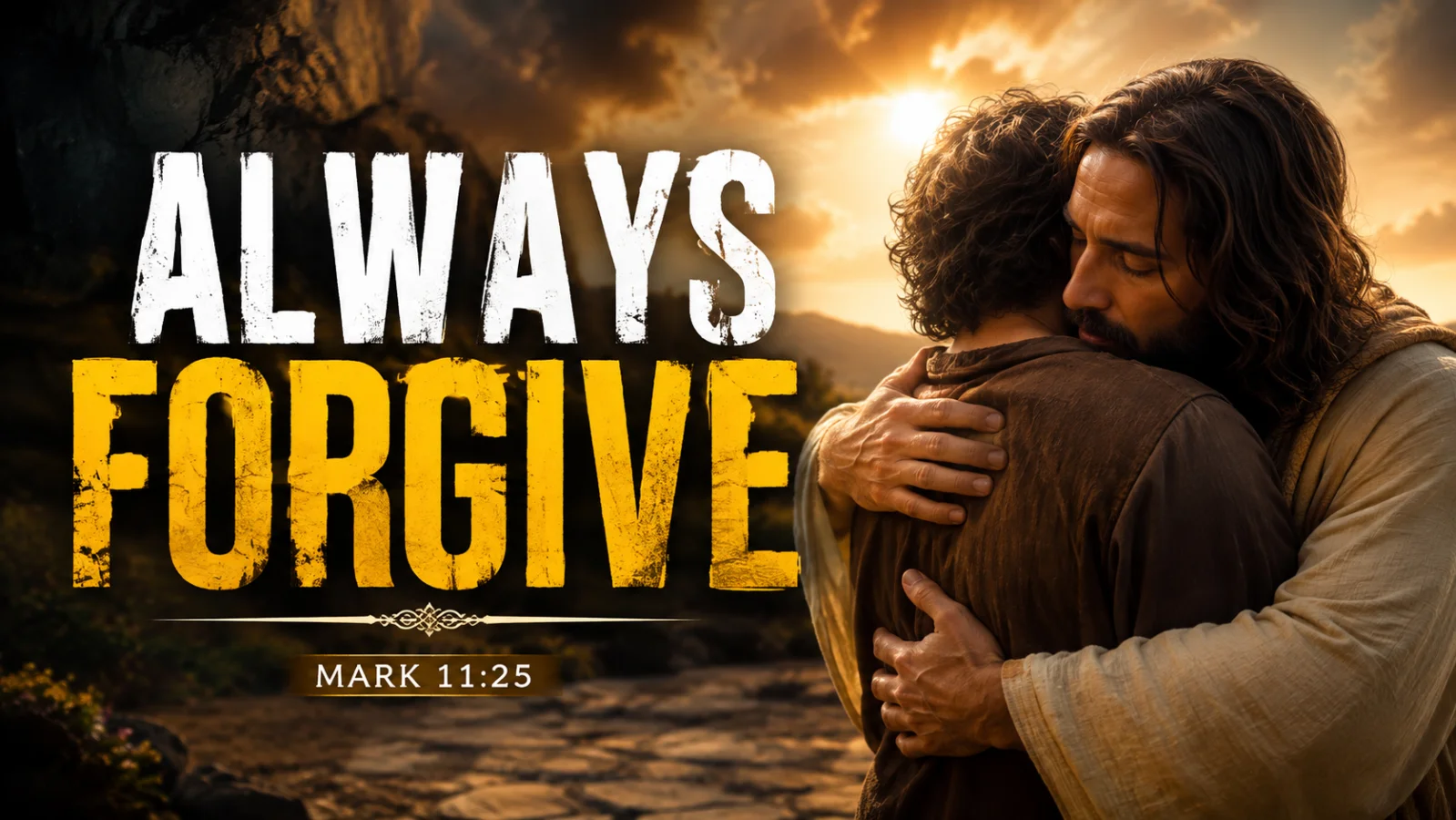
In Mark 11:25, He connects our willingness to forgive others with our own experience of God’s forgiveness. Forgiveness does not mean pretending that the wrong never happened. It means choosing to release the offence and refusing to allow bitterness to control our hearts.
Point 1: Forgiveness is a decision, not merely a feeling. There may be times when you do not feel like forgiving someone, but Jesus still calls you to forgive.
If we wait until every painful emotion disappears before we forgive, we may remain trapped in the offence for a long time. Forgiveness begins when we choose obedience to God over the desire to hold on to resentment.
Point 2: Unforgiveness can become a burden to the person carrying it. When we continually replay an offence in our minds, anger and bitterness can occupy our thoughts and rob us of peace.
The person who hurt us may have moved on, while we continue carrying the pain. Forgiveness helps us release what we cannot change and place the matter in God's hands.
Point 3: We forgive because God has forgiven us. Every believer has received mercy from God. We have all needed His forgiveness at one time or another.
Jesus therefore teaches us to extend to others the mercy we have received from Him. Ephesians 4:32 reminds us to be kind, tender-hearted and forgiving, just as God has forgiven us through Christ.
Point 4: Forgiveness does not mean approving wrongdoing. You can forgive someone without saying that what they did was right.
You can forgive and still establish healthy boundaries. You can forgive and still seek justice where necessary. Biblical forgiveness is about releasing personal vengeance and refusing to allow hatred to rule your heart.
Point 5: Forgiveness protects our relationship with God. Jesus specifically mentioned forgiveness while teaching about prayer. This shows that what we carry in our hearts matters to God.
We should not come before Him asking for mercy while deliberately holding on to hatred towards others. A heart that continually receives God's grace should also become a channel through which grace flows to others.
Point 6: Forgiveness brings freedom. Sometimes the greatest gift of forgiveness is not what it does for the offender, but what it does for the offended. When you forgive, you surrender the right to keep punishing the person in your heart.
You become free to move forward, heal and live in the peace God desires for you. Forgive, not because the offence was small, but because God's grace is greater.