Meditate on God's Word
Take a few quiet moments to reflect on today's message. Allow the Holy Spirit to speak to your heart as you read.
Reading time
7 min read
Introduction
There are many things we lose that we can replace. If we lose a pen, we can buy another. If we lose a shirt, we can get another one. But when a shepherd loses a sheep, it is different. The shepherd does not simply say, “I still have ninety-nine, so I am fine.”
He goes after the one.
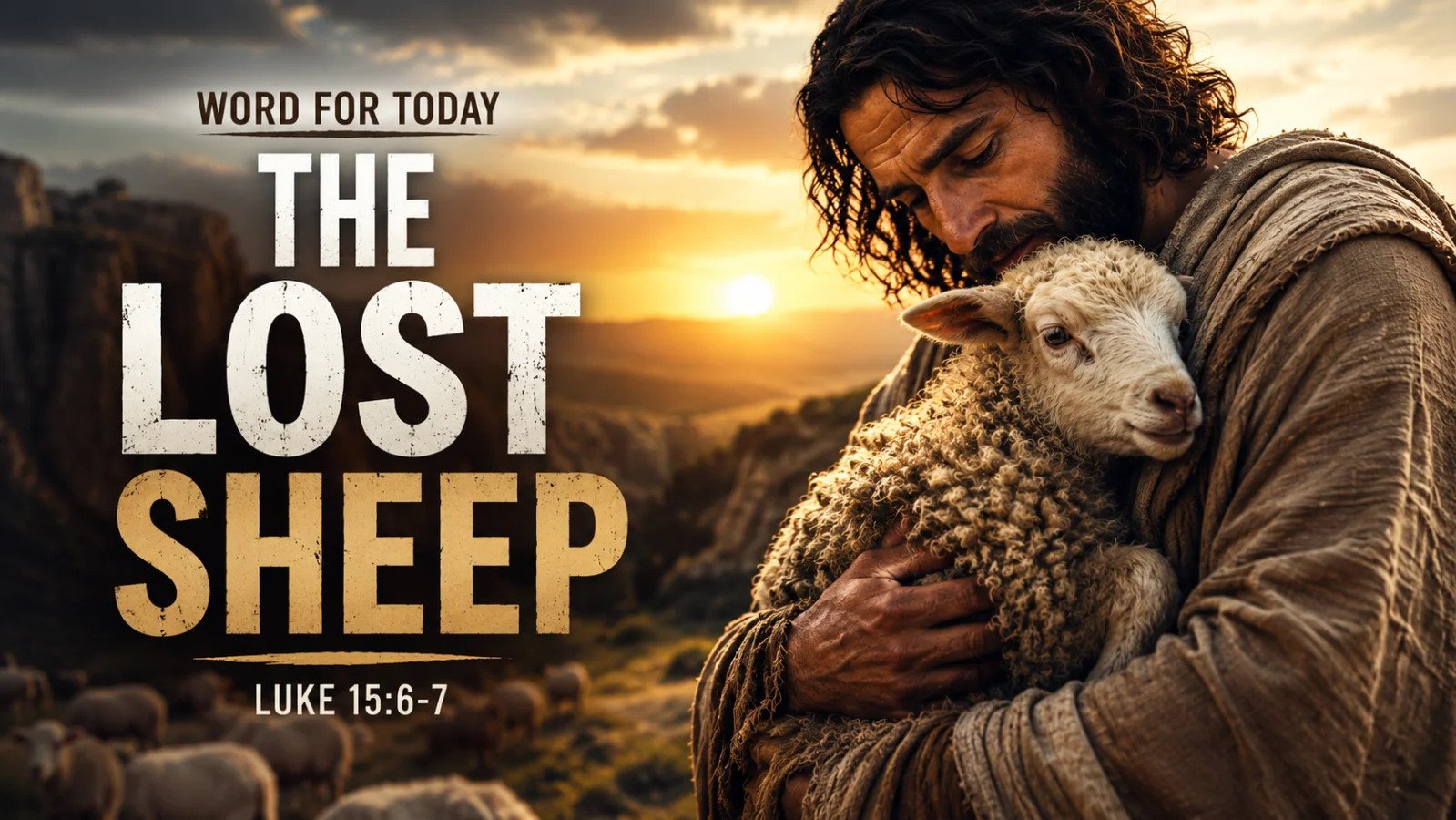
This is the heart of Jesus in Luke 15. He tells the story of a shepherd who had one hundred sheep, but one became lost. Instead of ignoring the missing sheep because ninety-nine remained, the shepherd went searching until he found it.
This teaches us something powerful about God: God values the one.
You may feel like one person among millions. You may feel forgotten, rejected, or too far gone. But heaven knows your name, and the Shepherd still cares about you.
1. THE LOST SHEEP WAS ONCE PART OF THE FLOCK
Jesus said the shepherd had one hundred sheep, but one became lost.
Notice something important: the sheep did not begin as a lost sheep.
It belonged to the flock.
This reminds us that people can drift away from God. Sometimes it happens through deliberate disobedience. Sometimes through wrong decisions. Sometimes through disappointment, temptation, wrong relationships, offence, or simply becoming distracted by the things of life.
The danger of drifting is that it often happens gradually.
A sheep may wander a little today, a little tomorrow, and eventually discover that it is far away from the shepherd.
That is how many people become spiritually distant from God. They stop praying. They stop reading the Word. They stop attending fellowship. They become comfortable with things they once resisted.
Before long, they realise, “I am no longer where I used to be.”
The good news is that being lost does not mean being abandoned.
2. THE SHEPHERD NOTICED THE ONE THAT WAS MISSING
The shepherd had ninety-nine sheep, yet he noticed that one was missing.
What a picture of God's love!
God does not look at humanity as a crowd without identity. He sees individuals.
He sees the person who is smiling outwardly but hurting inwardly.
He sees the person who has stopped attending church.
He sees the person who has fallen into sin and is ashamed to return.
He sees the person who thinks, “God cannot forgive me anymore.”
He sees the person who has wandered away.
The Shepherd knows when one sheep is missing.
You may have forgotten God, but God has not forgotten you.
You may have stopped calling His name, but He is still calling yours.
The lost sheep may not know where it is, but the Shepherd knows exactly where it is.
3. THE SHEPHERD WENT AFTER THE LOST SHEEP
Luke 15:4 says:
“What man of you, having an hundred sheep, if he lose one of them, doth not leave the ninety and nine... and go after that which is lost, until he find it?”
The shepherd did not sit down and hope that the sheep would find its way home.
He went after it.
This reveals the seeking heart of God.
Jesus came into the world because humanity was lost. He came to seek and to save that which was lost.
The cross is evidence that God did not give up on us.
Jesus did not say, “They have sinned, so let them remain lost.”
He came looking for us.
He came into our darkness.
He entered our brokenness.
He carried our sins.
He died in our place.
And through His resurrection, He opened the way back to the Father.
The Gospel is not simply the story of people looking for God.
It is the story of God looking for people.
4. THE SHEPHERD DID NOT GIVE UP UNTIL HE FOUND IT
One phrase in this passage is particularly powerful:
“Until he find it.”
Not until he became tired.
Not until the journey became difficult.
Not until the sheep became too far away.
Until he found it.
That is persistent love.
The shepherd was determined to recover what belonged to him.
There are times when we think we have gone too far for God to reach us.
But there is no distance that God's grace cannot cross.
Peter denied Jesus, but Jesus restored Peter.
The prodigal son left home, but the father welcomed him back.
Saul persecuted the Church, but God transformed him into Paul, an apostle of Christ.
Your failure does not have to be your final chapter.
You may have wandered, but you can return.
You may have fallen, but you can rise.
You may have failed, but grace is still available.
5. WHEN THE SHEPHERD FOUND THE SHEEP, HE CARRIED IT HOME
Luke 15:5 says:
“And when he hath found it, he layeth it on his shoulders, rejoicing.”
This is beautiful.
The shepherd did not beat the sheep.
He did not insult it.
He did not say, “You foolish sheep, why did you wander away?”
He carried it.
Sometimes a lost person needs more than correction. They need restoration.
There are moments when we are too weak to walk ourselves back.
We have been wounded.
We are tired.
We are ashamed.
We have exhausted ourselves trying to find our way.
But the Shepherd is able to carry us.
When your strength fails, His strength remains.
When your feet cannot carry you, His shoulders can.
When you cannot find your way home, He can bring you home.
That is grace.
6. HEAVEN REJOICES WHEN THE LOST RETURNS
Jesus said in verse 7:
“There is joy shall be in heaven over one sinner that repenteth.”
Think about that.
One sinner.
Heaven celebrates one restored life.
One person returning to God matters.
One soul coming back matters.
One broken life being restored matters.
One person repenting matters.
Sometimes we measure success by crowds, numbers and statistics. Jesus measures the value of a soul differently.
The ninety-nine mattered.
But the one mattered too.
Perhaps there is someone reading or hearing this message who feels like that lost sheep.
You may have been away from God.
You may have compromised your faith.
You may have allowed sin to take control.
You may have become cold spiritually.
You may even be sitting in church while your heart is far away.
Today, the Shepherd is calling you home.
7. THE LOST SHEEP MUST RESPOND TO THE SHEPHERD
The shepherd can search for the sheep, find the sheep and carry the sheep, but the sheep must still be willing to return.
God's grace is available, but we must respond.
Repentance means turning around.
It means saying:
“Lord, I have wandered. I am coming home.”
You do not have to clean yourself up before coming to Jesus.
Come as you are.
The Shepherd is not asking you to find your way back by yourself.
He is calling you.
Listen to His voice.
Return to Him.
Conclusion
The message of the lost sheep is ultimately a message of hope.
You are not forgotten.
You are not too far gone.
You are not beyond God's reach.
The Shepherd is still searching.
The ninety-nine were safe, but the shepherd still cared about the one that was missing.
That one sheep mattered.
And if you were the only person on earth who needed salvation, Christ's sacrifice would still demonstrate the value He places on your soul.
So if you have wandered, come home.
If you have fallen, rise again.
If you have been wounded, let the Shepherd heal you.
If you have become spiritually cold, return to the fire.
If you have never surrendered your life to Christ, today is the day to come to Him.
The Shepherd is looking for His sheep.
And when He finds the lost sheep, He does not rejoice because He has condemned it. He rejoices because He has recovered it.