Meditate on God's Word
Take a few quiet moments to reflect on today's message. Allow the Holy Spirit to speak to your heart as you read.
Reading time
3 min read
Introduction
One of the greatest demonstrations of Christian maturity is the ability to forgive. Forgiveness is not always easy because people can wound us deeply. Betrayal, harsh words, rejection and disappointment often leave painful scars. Yet, God calls every believer to forgive, not because others deserve it, but because we have received His forgiveness through Jesus Christ.
Unforgiveness imprisons the heart, but forgiveness brings freedom, healing and restoration. A forgiven person should also become a forgiving person.
1. Forgiveness Reflects the Character of God
God is the perfect example of forgiveness. Though we sinned against Him, He chose to forgive us through the sacrifice of Christ.
Romans 5:8 reminds us that Christ died for us while we were still sinners. If God could forgive our countless offences, we should also forgive those who offend us.
When we forgive, we become living examples of God's love and mercy.
2. Forgiveness Begins with a Tender Heart
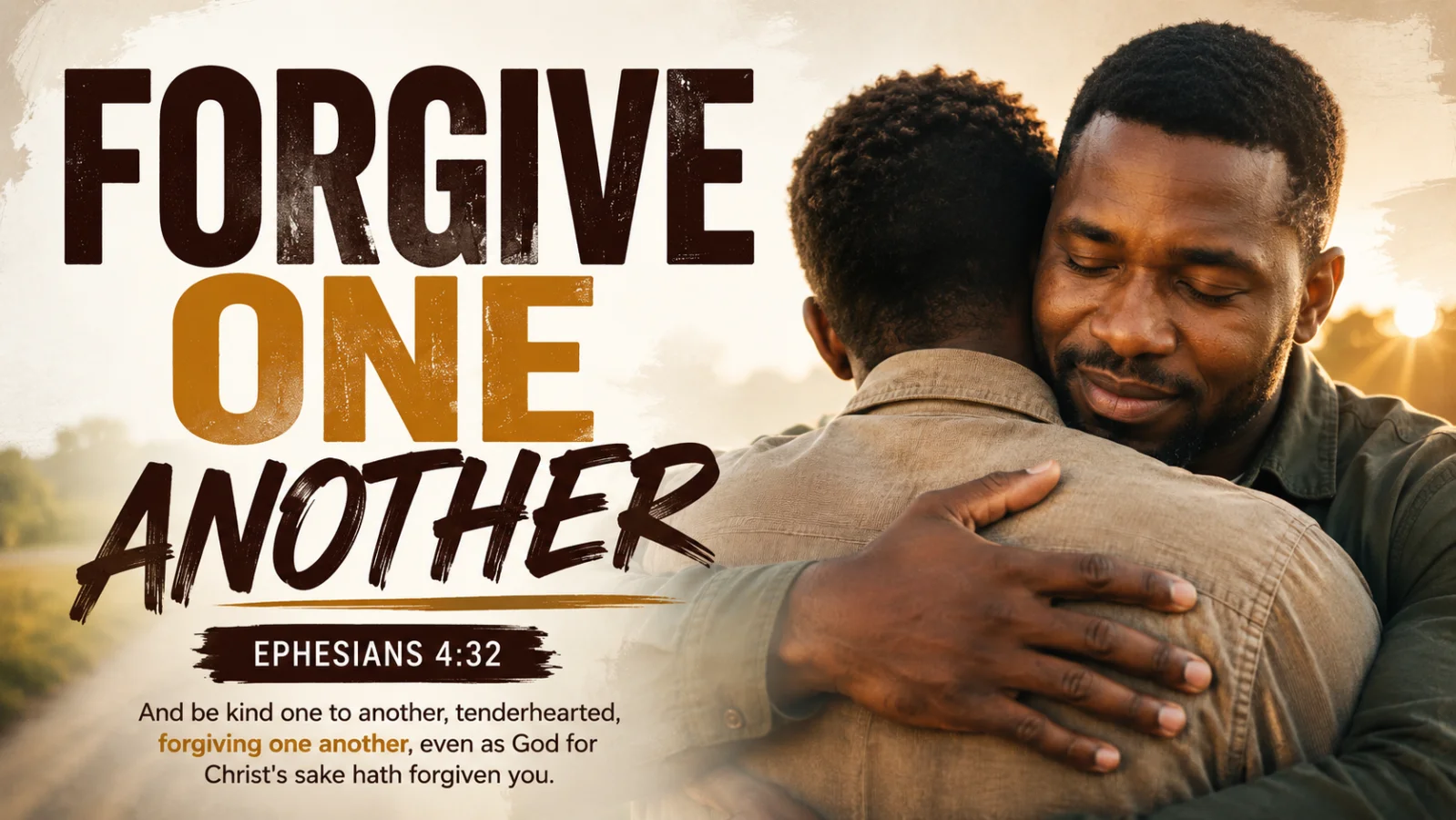
Ephesians 4:32 begins by saying, "Be kind... tenderhearted..."
A hard heart finds it difficult to forgive, but a tender heart is moved by compassion rather than revenge.
Ask yourself:
Am I holding on to bitterness?
Do I rejoice when those who hurt me suffer?
Am I willing to let God heal my heart?
Only a heart softened by the Holy Spirit can truly forgive.
3. Unforgiveness Has Serious Consequences
Holding on to offences can:
Rob us of our peace.
Hinder our prayers.
Damage relationships.
Give the devil a foothold (Ephesians 4:27).
Lead to bitterness, anger and hatred.
Hebrews 12:15 warns us that bitterness can defile many people. One unforgiving heart can negatively affect an entire family, church or community.
4. Forgiveness Is a Decision Before It Is a Feeling
Many people wait until they "feel" like forgiving, but forgiveness is first an act of obedience.
Jesus taught in Matthew 18:21-22 that forgiveness should have no limit.
Choosing to forgive does not mean:
Pretending the offence never happened.
Approving of wrongdoing.
Ignoring justice.
It means releasing the offender into God's hands and refusing to carry the burden of resentment any longer.
5. The Blessings of Forgiveness
Those who forgive experience:
Peace of mind.
Emotional and spiritual healing.
Freedom from bitterness.
Restored fellowship with God.
Healthy relationships.
A clear conscience before God.
Forgiveness benefits the forgiver as much as the forgiven.
Practical Steps to Forgive
Pray for the person who offended you.
Remember how much God has forgiven you.
Refuse to replay the offence repeatedly.
Speak words of blessing instead of revenge.
Allow the Holy Spirit to heal your wounded heart.
Conclusion
Forgiveness is not a sign of weakness but of spiritual strength. Jesus forgave those who crucified Him, praying, "Father, forgive them; for they know not what they do" (Luke 23:34).
As followers of Christ, we are called to forgive because we have first been forgiven. Let us lay aside bitterness, anger and resentment, and choose the path of love, mercy and grace.
Today, release every offence into God's hands. Forgive one another, just as God in Christ has forgiven you.