Meditate on God's Word
Take a few quiet moments to reflect on today's message. Allow the Holy Spirit to speak to your heart as you read.
Reading time
5 min read
Introduction
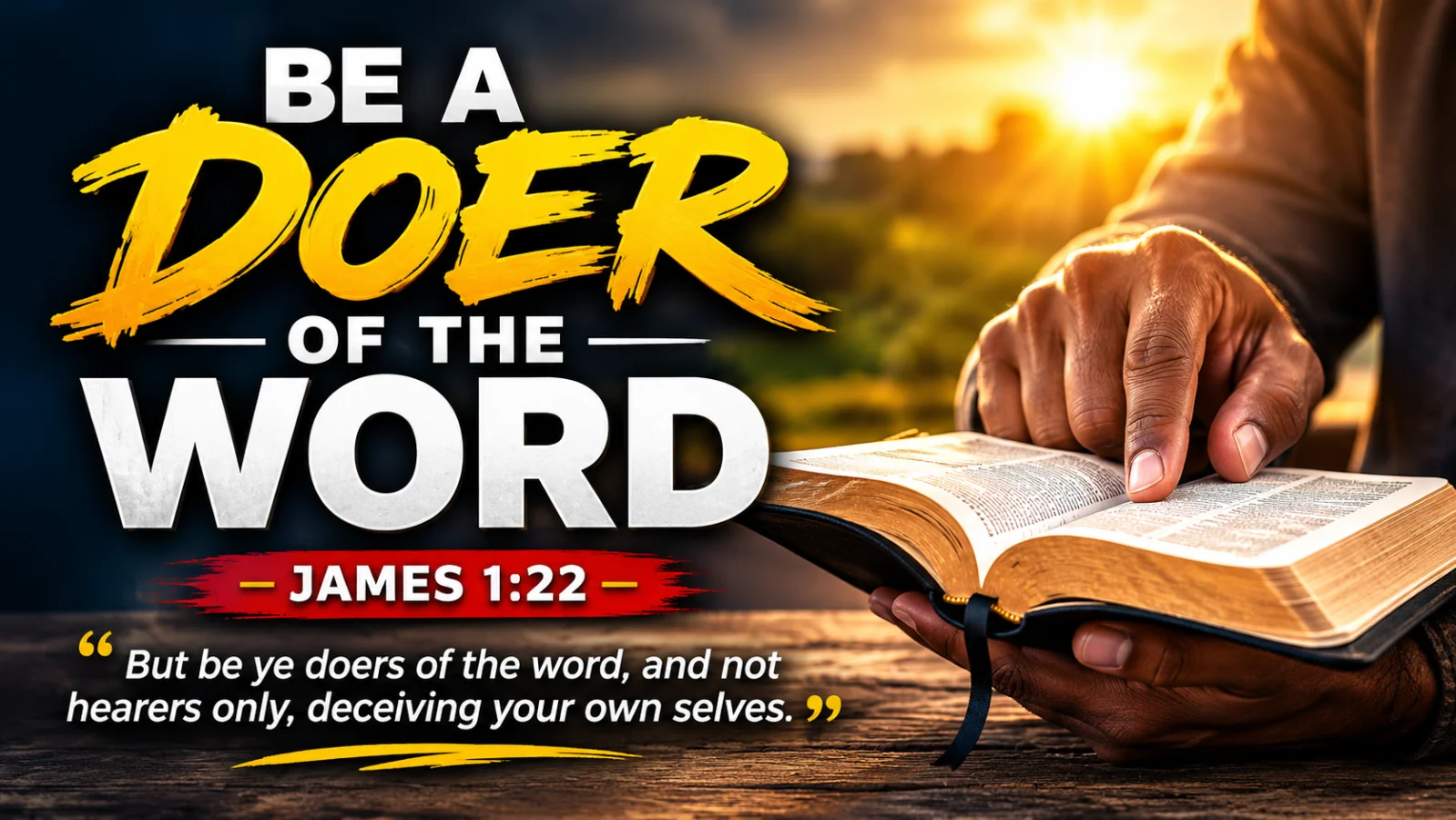
It is possible to hear God's Word regularly, understand what it says, enjoy powerful preaching, and still remain unchanged. We can listen to sermons, read the Bible, attend church and even agree with God's truth, yet fail to put that truth into practice. James warns us that hearing without doing can deceive us into thinking we are spiritually mature when our lives tell a different story.
God did not give us His Word merely to inform our minds. He gave it to transform our lives. The Word of God is meant to shape our choices, attitudes, relationships, speech and daily conduct. James therefore calls us to move beyond listening and become people who practise what God says.
The question is not only, "What have I heard?" but also, "What am I doing with what I have heard?"
1. Hearing the Word Is Not Enough
James does not condemn hearing the Word. Hearing is necessary. Faith comes by hearing the Word of God (Romans 10:17). The problem begins when hearing becomes the end rather than the beginning of obedience.
Imagine someone who hears a doctor explain exactly what is needed for recovery but refuses to follow the instructions. Knowing the prescription does not produce healing if it is never followed. In the same way, knowing God's instructions without obeying them does not produce the transformation He desires.
Every time we hear God's Word, we are given an opportunity to respond. The blessing is not simply in knowing what God has said, but in allowing His Word to govern how we live.
2. God's Word Requires a Response
The Word of God often calls us to do something uncomfortable. It may tell us to forgive someone who hurt us, control our tongue, give generously, flee temptation, love our enemies, honour our marriage, tell the truth or trust God when circumstances are uncertain.
Obedience becomes meaningful when God's Word challenges our preferences. It is easy to obey when His instruction agrees with what we already want. Genuine discipleship is revealed when we choose God's way even when our feelings suggest another direction.
Jesus said, "If ye love me, keep my commandments" (John 14:15). Love for Christ is not demonstrated merely by what we say in worship, but also by how seriously we take His instructions.
3. Obedience Protects Us from Self-Deception
James says that the person who hears but does not act is "deceiving your own selves". This is a serious warning. Spiritual self-deception occurs when we mistake exposure to God's truth for obedience to God's truth.
A person may know many Bible verses and still refuse to forgive. Someone may hear teachings about generosity but remain controlled by greed. Another may hear about purity yet deliberately entertain temptation. Knowledge can increase while character remains unchanged.
The purpose of God's Word is not simply to make us more informed Christians. It is to make us more obedient followers of Christ. When the Word exposes something in our lives, our response should not be to admire the message but to act upon it.
4. Obedience Turns Truth into Daily Life
A doer of the Word brings biblical truth into ordinary situations. When anger rises, God's Word teaches us how to respond. When temptation comes, God's Word gives us direction. When fear appears, God's promises remind us where to place our trust. When someone offends us, Scripture teaches us to forgive.
This means Christianity must be visible in everyday life. Our faith should influence how we speak to our spouse, how we treat our children, how we conduct business, how we respond to difficult people and how we behave when nobody is watching.
Jesus said in Luke 11:28, "Blessed are they that hear the word of God, and keep it." Hearing opens the door, but obedience is the step through it.
The Word you obey is the Word that transforms you.
5. Start with What God Has Already Shown You
Sometimes we are waiting for a new revelation while ignoring an instruction God has already made clear. We want to know God's will for the future, yet we have not acted on His Word concerning today.
If God has shown you that you need to forgive, forgive. If you need to apologise, humble yourself and do it. If you need to stop a sinful habit, take practical steps to leave it behind. If you need to restore a broken relationship, seek peace where it is possible.
Obedience often begins with one simple step. You do not have to understand everything about tomorrow before you can obey God today.
Conclusion
James reminds us that the Christian life is not built on hearing alone. God's Word must move from our ears into our hearts and from our hearts into our actions. The goal is not merely to know Scripture, but to live it.
Ask yourself honestly: What has God been saying to me that I have not yet obeyed? Do not allow familiarity with the Bible to replace obedience to the God of the Bible.
Today, choose to act on what you have heard. Let God's Word shape your decisions, relationships, character and daily life. Do not merely hear the Word. Be a doer of the Word.